In the realm of geotechnical engineering, the laboratory testing category forms the backbone of reliable site investigation and foundation design. For projects across Basildon, from the redevelopment of town centre plots to new infrastructure in the surrounding Essex countryside, laboratory analysis transforms field samples into quantifiable engineering parameters. Without this critical phase, ground models remain speculative, and construction risks escalate significantly. Our Basildon laboratory services encompass a comprehensive suite of physical, mechanical, and chemical tests on soils, rocks, and aggregates, ensuring that every material's behaviour under load and in the presence of water is thoroughly understood.
Basildon's geology presents a particular set of challenges that make rigorous laboratory testing indispensable. Much of the town and its environs sit upon the London Clay Formation, a thick, overconsolidated deposit known for its high shrink-swell potential and susceptibility to softening when exposed to water. Overlying this in many areas are Quaternary deposits, including Head, Brickearth, and river terrace gravels associated with the River Crouch and its tributaries. These superficial materials can exhibit variable density, metastable structures, and in the case of Brickearth, a propensity for collapse upon wetting. Accurate determination of parameters like Atterberg limits, undrained shear strength, and compaction characteristics is not merely academic; it is a practical necessity to prevent structural movement and serviceability failures.
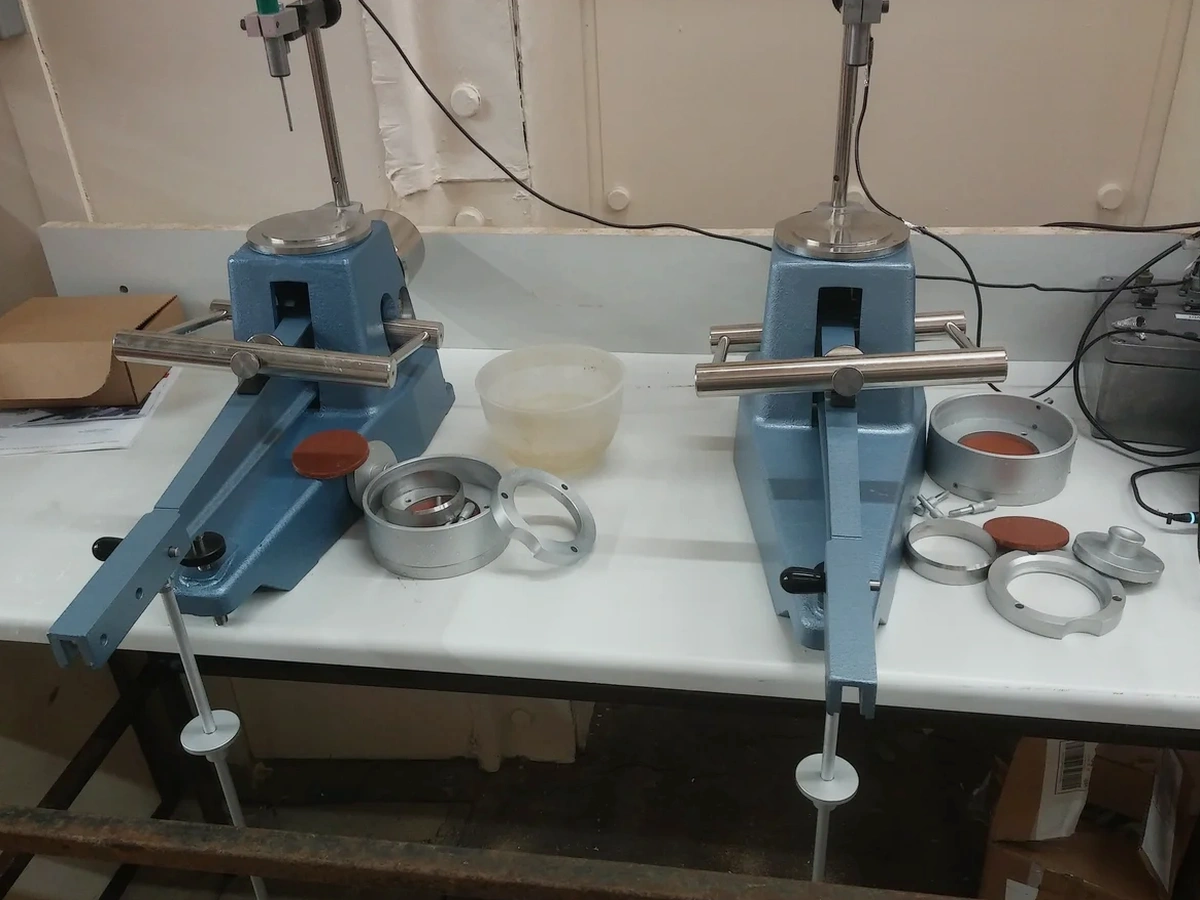
All testing conducted within this category adheres strictly to the standards mandated by the UK construction industry. The primary normative framework is BS 1377, the British Standard for methods of test for soils for civil engineering purposes, which details procedures for classification, compaction, and strength tests. For projects involving earthworks and pavement construction, the Specification for Highway Works (SHW) Series 600 is paramount, dictating compliance through its defined testing protocols. Chemical testing for aggressive ground conditions follows BRE Special Digest 1 and the requirements of BS EN 1744 for aggregates. These standards are routinely referenced in planning conditions and by bodies such as Essex County Council, making accredited laboratory testing a non-negotiable component of project delivery in Basildon.
The demand for these services spans a wide spectrum of developments. Residential schemes, particularly those on brownfield land like the former industrial areas in Laindon or Pitsea, require comprehensive contamination suites alongside geotechnical classification. Infrastructure projects, such as the A127 and A13 corridor improvements, depend heavily on grain size analysis (sieve + hydrometer) to inform pavement design and drainage assessments. For commercial builds and industrial warehousing around the Burnt Mills and Festival Leisure Park areas, advanced strength and compressibility testing is essential for foundation optimisation. Even smaller-scale domestic extensions warrant a fundamental suite of classification tests to confirm bearing capacity and avoid the pitfalls of the underlying London Clay.
Available services
Common questions
Why is laboratory testing essential for a ground investigation in Basildon?
Laboratory testing is critical in Basildon primarily due to the prevalence of London Clay and variable Quaternary deposits. Field descriptions alone cannot quantify the high shrink-swell potential, undrained shear strength, or chemical aggressivity of these soils. Accredited testing to BS 1377 provides the definitive design parameters needed to prevent structural cracking, foundation settlement, and sulphate attack on buried concrete, ensuring compliance with NHBC Standards and local authority building control requirements.
What UK standards govern geotechnical laboratory testing for my project?
The primary standard is BS 1377, which covers soil classification, compaction, and strength testing. For earthworks, the Specification for Highway Works (SHW) Series 600 is key, while BRE Special Digest 1 guides chemical testing for aggressive ground. Aggregate testing follows BS EN 932 and 1097 series. Adherence to these standards is typically stipulated in planning conditions and is essential for demonstrating regulatory compliance to bodies like the Environment Agency and Essex County Council.
How do I know which laboratory tests are required for a site in Basildon?
The required test schedule is determined by the ground conditions encountered during the investigation and the proposed structure. A typical programme begins with classification tests like moisture content, Atterberg limits, and particle size distribution. Depending on whether the project encounters London Clay's shrink-swell potential or granular river terrace deposits, this is followed by strength, compressibility, or chemical tests. The schedule should be designed by a geotechnical engineer to directly answer the project's specific design questions.
What is the typical turnaround time for a routine geotechnical testing schedule?
Turnaround times vary depending on the complexity of the test schedule and the soil type. Routine classification and compaction tests can often be reported within 5 to 7 working days. However, tests requiring longer curing or saturation stages, such as triaxial effective stress tests or one-dimensional consolidation tests on London Clay, may take two to three weeks or more. An expedited service is often available for critical project milestones, and a project-specific timeline is always confirmed at the commissioning stage.